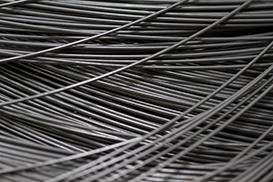
Cold heading wire (often abbreviated as CHQ wire) is a high-performance metallic material specifically designed for cold-forming processes such as cold heading and cold extrusion.
Cold Heading Quality Wire (CHQ Wire) is a high-performance metallic material specifically designed for cold forming processes, such as cold heading and cold extrusion.
-----------
Simply put, it’s like “super-strength modeling clay” for the manufacturing industry: without heating, immense pressure is applied to cause metal wire to “flow” through a die, ultimately forming bolts, nuts, or parts with intricate shapes.
To put it simply, it acts like the "industrial version of high-strength Play-Doh"-it allows metal wire to "flow" within a mold under immense pressure without being heated, eventually transforming into bolts, nuts, or various complex-shaped parts.
1. Core Features: Why Is It Different from Ordinary Steel Wire?
Ordinary steel wire is prone to cracking or breaking if forcibly flattened. Meanwhile, CHQ wire must possess the following “hardcore” qualities:
· Extremely high ductility: It can undergo severe deformation without cracking.
· Excellent surface quality: The surface must be free of scratches, cracks, or tears, as even the smallest defect can be amplified into a critical fracture during cold heading.
· Pure composition: Extremely low levels of internal impurities (such as sulfur and phosphorus) and a uniform microstructure ensure consistent strength and toughness throughout the entire length of the wire.
• Dimensional accuracy: Wire diameter tolerances are typically maintained at the micrometer level to ensure smooth feeding into high-speed cold heading machines.
While ordinary steel wire is prone to cracking or breaking when forcibly flattened, CHQ wire must possess the following “hardcore” qualities:
·Extremely High Plasticity (Formability): It can withstand severe deformation without cracking.
·Excellent Surface Quality: The surface shall be free of scratches, cracks, or pull marks, as any microscopic defect will be magnified into a catastrophic fracture during the rapid cold heading process.
·Pure Composition: It features an extremely low level of internal impurities, such as sulfur and phosphorus, and a uniform microstructure, thereby guaranteeing consistent strength and toughness across every inch of the wire.
·Dimensional Precision: Wire diameter tolerances are typically controlled at the micron level to ensure smooth feeding into high-speed cold heading machines.
2. Production Process: How is a Coil of CHQ Wire Made?
A typical production process usually includes the following key steps:
· Raw Material Selection: Use hot-rolled wire rod made from high-quality low-carbon steel (such as C10C), medium-carbon steel (such as 35K), or alloy steel (such as 10B21, SCM435).
· Pickling & Coating: Surface scale is removed using acid, followed by the application of a phosphating film or lubricant. This “outer layer” is crucial; it reduces die friction during cold heading.
·Drawing: Coarse wire rod is drawn through a drawing machine to reduce its diameter to the target size. This process increases the material’s strength.
· Annealing: If the material is too hard, it must be placed in an annealing furnace for heat treatment to soften it and restore its ductility.
· Finished-product inspection: Includes metallographic analysis (to examine the internal microstructure), tensile testing, and most importantly, the cold heading test (where a section of wire is flattened to one-third of its original height to check for cracking).
A typical production flow involves the following key steps:
·Raw Material Selection: High-quality hot-rolled wire rods made of low-carbon steel (e.g., C10C), medium-carbon steel (e.g., 35K), or alloy steel (e.g., 10B21, SCM435) are selected.
·Pickling & Coating: Acid is used to remove surface scale, followed by the application of a phosphate coating or lubricant. This "outer layer" is crucial for reducing mold friction during cold heading.
·Fine Drawing: A drawing machine reduces the thickness of the wire rod to the target diameter, a process that enhances the material’s strength.
·Annealing: If the material becomes too hard, it enters an annealing furnace for heat treatment to soften it and restore its plasticity.
·Finished Product Inspection: This includes metallographic analysis (to examine internal microstructures), tensile testing, and the critical Cold Upsetting Test (where a segment of the wire is compressed to one-third of its original height to detect cracking).
3. Application Scenarios: What has it become?
Cold-heading wire is the “staple” of the fastener industry. Almost all metal fasteners around you originate from this:
· Automotive industry: Engine bolts, wheel hub bolts.
· Construction industry: High-strength bolts, rebar anchor bolts.
· Electronics/Home Appliances: Miniature screws for mobile phones, compressor components for air conditioners.
·Aerospace: Special high-strength rivets.
CHQ wire is the “bread and butter” of the fastener industry. Nearly all metal connectors around you originate from it:
·Automotive Industry: Engine bolts, wheel bolts.
·Construction Industry: High-strength bolts, chemical anchors/rebar bolts.
·Electronics/Appliances: Micro-screws for mobile phones, air conditioner compressor parts.
·Aerospace: Special high-strength rivets.
4. Industry Jargon: What is “spheroidizing annealing”?
When communicating with customers, the annealed condition is often mentioned. Spheroidizing annealing is the most advanced heat-treatment process. It transforms the carbides within the steel into a spherical morphology, yielding exceptional ductility and making it ideal for manufacturing complex, non-standard (irregularly shaped) components.
When communicating with clients, the annealing state is frequently discussed. Spheroidizing Annealing is a high-end process that transforms the carbides within the steel into a spherical shape. This provides ultimate plasticity, making it ideal for producing non-standard (special-shaped) parts with complex geometries.